
Late Fall in the Garden: What to Do Now and What to Leave Alone
The first hard frost has a way of making a garden look finished. The hosta leaves slump, the annuals turn to mush, and it is tempting to put the tools away and call it a year. But what you do in the next few weeks decides a lot about how your garden looks in April. Late fall is not about doing more. It is about doing the right few things at the right time.
Leave most of the garden standing
The general rule we follow in our display gardens is to let the garden do its own winter work. Hostas are a good example. After frost the foliage collapses, and it looks untidy for a while, but we leave it in place and clean it up in spring. There is no rush to haul it away this fall.
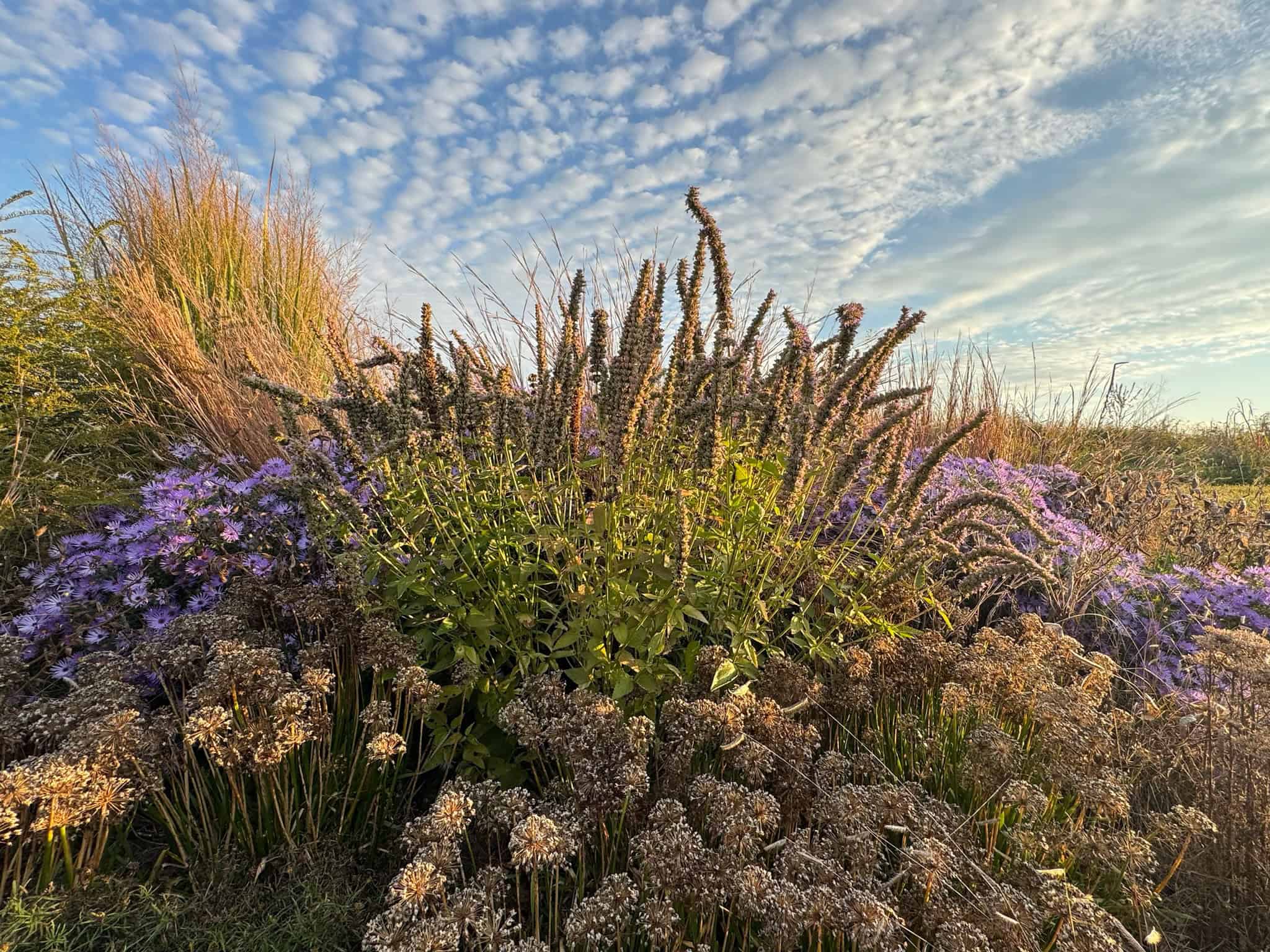
Ornamental grasses still look amazing in December with plumes catching frost and snow. Coneflower and sedum seed heads feed goldfinches and chickadees well into winter, and they give the bed some structure when everything else is bare. You can cut all of it back in early spring before new growth starts. A garden with a little standing texture is also far more interesting to walk past in January than a field of bare soil.
Peonies are one exception worth making. Cut them to the ground after the foliage has died back, and throw the clippings in the trash rather than the compost pile, since peonies are prone to fungal problems that linger on old leaves.
Roses and spring flowering shrubs need a lighter hand. Resist the urge to prune lilacs and similar shrubs now, because the buds for next spring’s flowers are already set. Save the heavy pruning for later.

Water before the freeze, especially the evergreens
This is the step people skip most often, and it matters most for conifers and other evergreens. They keep losing moisture through their needles all winter, even when the ground is frozen and the roots cannot take anything up. A tree that goes into winter thirsty is a tree that turns brown by March.
Keep watering deeply until the ground actually freezes, particularly for anything planted this year. A slow soak once a week during dry stretches does far more good than a light sprinkle every day. If fall turns out wet, you can ease off, so go by what the soil is telling you rather than the calendar.
Protect the vulnerable ones
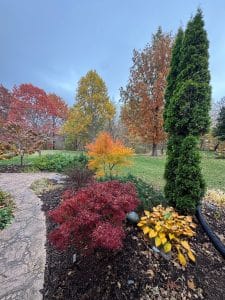
Young trees with thin bark can suffer sunscald on bright winter days, and a plastic or wire trunk guard also keeps rabbits and mice from chewing the base. Broadleaf evergreens such as boxwood can be burned by winter wind, so a burlap screen on the windward side is often enough to help them through. And if you have ceramic or clay pots outside, empty them and bring them in, because soil that freezes and swells inside a pot will crack it. You can also turn them upside down when they are empty and leave them outside.
We should be honest that Zone 5b winters are not gentle, and not every perennial that survives one mild winter will survive the next. Choosing plants suited to our climate and giving new plantings a good start in fall is the best protection there is.