
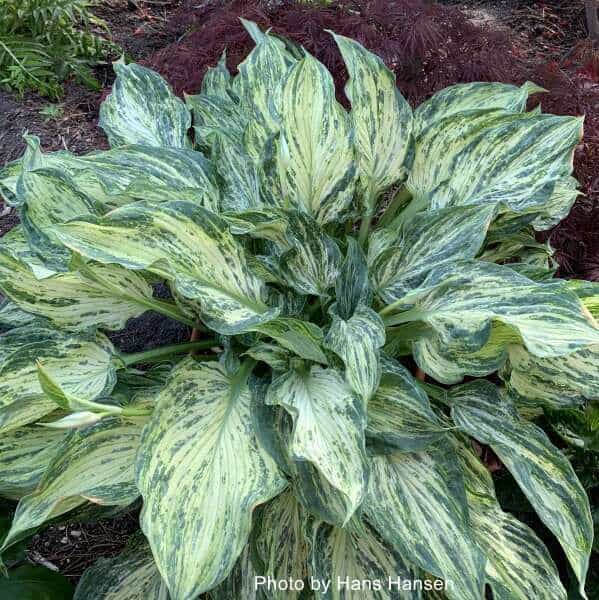
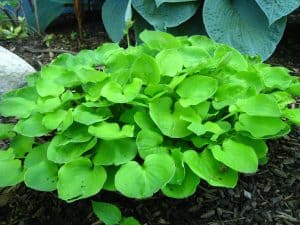
Hosta ‘Limey Lisa’
If you have a shady spot in your yard that has stumped you for years, hostas are probably the answer you have been overlooking for your garden. They are one of the most reliable, low maintenance perennials for shade, and once you understand the basic categories, picking the right one for your space gets a lot easier.
Choosing a hosta by size
Hostas range from mini varieties that stay under six inches tall and wide, all the way up to giant types that can spread four feet or more across at full maturity. Mini hostas work beautifully tucked along a shaded path. Giant hostas make a serious statement as a single specimen plant or as the anchor of a shade bed. Most people end up somewhere in the middle, with medium to large hostas filling out a border.
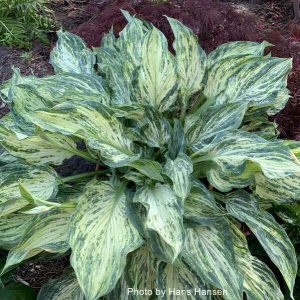
Hosta ‘Emperor’s New Clothes’
Matching hosta varieties to your light conditions
Light requirements matter more than people expect. While hostas are known as shade plants, the amount of shade they actually want varies by variety. Blue-leaved hostas tend to hold their color best in deeper shade, since morning sun especially can fade that waxy blue coating. Gold and yellow-leaved hostas often want a bit more light, sometimes even a few hours of direct morning sun, to really develop their best color. Green and variegated hostas tend to be the most flexible, doing well across a range of light conditions.
Hosta leaf color and variegation
Leaf color and pattern is where the fun really starts. Solid blue, solid green, and solid gold hostas all bring something different to a shade bed, but variegated hostas, with their streaks and margins of contrasting color, tend to be the showstoppers. A well-placed variegated hosta can brighten up a dark corner of the yard almost like a splash of light.
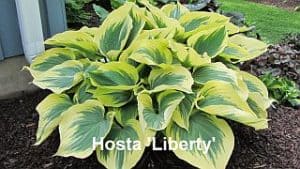
Hosta ‘Liberty’
Hosta leaf texture
Texture is the detail experienced gardeners pay attention to and beginners often miss. Some hostas have smooth, glossy leaves, others are deeply quilted or puckered. Mixing textures, not just colors, is what gives a shade garden real depth.
Soil and moisture needs for hostas One thing to keep in mind regardless of variety: hostas like consistent moisture and rich, well-drained soil. They are forgiving plants, but they are not drought plants, so a shady spot that also stays reasonably moist is going to give you the best results.
Visit our garden center in Princeton, IL to see our full selection of hostas in person and find the right variety for your shade garden.