

We’re passionate about offering plants that support local ecosystems, thrive in our region, and provide long‑lasting beauty. Last year we introduced a new collection of native perennials as well as more natives in our tree & shrub department. For 2026, we’re excited to expand on those collections even further, adding many more native species to the lineup. Below is a brief look at a sampling of standout plants you’ll find in our Native to Illinois collection at hornbakergardens.com.
Many of our native perennials are part of the Natural Garden Natives brand. These native plants are grown in St. Charles, Illinois and include a wide assortment of species that occur naturally in the Midwest and are ideal for growing throughout the region. They are well adapted to the local ecotype and offer much-needed food and habitat for native wildlife.
A few prairie favorites include Echinacea purpurea (Purple Coneflower), Asclepias tuberosa (Butterfly Weed), and Schizachyrium scoparium (Little Bluestem). These species are excellent for sunny, well-drained locations and support a wide range of pollinators and beneficial insects.
If you are looking for moisture-loving natives, check out Iris versicolor (Blue Flag Iris), Asclepias incarnata (Swamp Milkweed), or Lobelia cardinalis(Cardinal Flower). These species are well suited to rain gardens, pond edges, and other areas with seasonally moist soil.
For a shady or woodland area, you can find Aquilegia canadensis (Wild Columbine), Mertensia virginica (Virginia Bluebells), and Phlox divaricata (Woodland Phlox). These are perfect for part shade to shade and bring color and ecological value to woodland edges and naturalized beds.
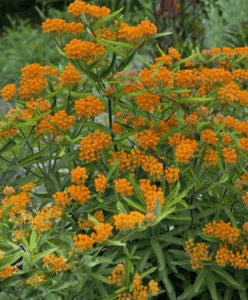
We are also bringing in more perennials from the American Beauties Native Plants branded program, which promotes garden-worthy native plants known for their wildlife value. Plants in this line are selected for both ecological integrity and strong ornamental qualities, making them ideal for home landscapes that support pollinators, songbirds, and native insects. American Beauties natives are defined as straight species and native selections of straight species. A native selection is a plant that has been selected because of some unique quality such as disease resistance, height, flower color, or cold hardiness. These plants are found in nature, and because of their interesting traits are brought into cultivation. These selections are still very closely related to the straight species and bring all the same wonderful ecological value to your garden.
When viewing our native collections on our website, look for the “AB” after the plant size to know it is part of the American Beauties brand. Here are a few standout American Beauties selections. Phlox ‘Jeana’ (Tall Garden Phlox) is a top-performing garden phlox known for its exceptional mildew resistance and extraordinary pollinator appeal. Its clusters of lavender-pink blooms attract a stunning diversity of butterflies. Echinacea ‘Ruby Star’ (Coneflower) is a vibrant, rose‑purple coneflower with large, fragrant blooms. It’s a strong, upright grower that shines in sunny gardens while providing nectar and seed for wildlife. Anemone canadensis (Canada Anemone) is vigorous native groundcover that lights up late spring with crisp white blooms, offering vital early-season pollen for native bees while naturalizing beautifully in moist, sunny to partly shaded gardens.
Native Trees & Shrubs: Growing the Collection
Our commitment to Illinois natives doesn’t stop at perennials. This year we’re also expanding our tree and shrub offerings with an impressive lineup of species native to Illinois, plants that anchor the landscape, support entire food webs, and provide beauty across all four seasons. You can browse the full collection at hornbakergardens.com, but here are some highlights worth knowing about.
Oaks are the crown jewels of any native planting, and we’re carrying several outstanding species this year. Quercus alba (White Oak), Quercus rubra (Northern Red Oak), Quercus coccinea (Scarlet Oak), Quercus macrocarpa (Bur Oak), Quercus bicolor (Swamp White Oak), and Quercus imbricaria (Shingle Oak) are all on hand. Oaks support more species of caterpillars, birds, and wildlife than virtually any other tree genus in North America, making them an unmatched investment in your local ecosystem. If you’re looking for something a little unusual, we’re also bringing in Quercus x bebbiana (Bebb Oak), a naturally occurring hybrid that combines some of the best traits of its parent species.
For smaller trees and multi-stem specimens, Cercis canadensis (Eastern Redbud) is one of the most beloved native trees in the Midwest, putting on a spectacular show of rosy-pink blooms in early spring before the leaves emerge. In addition to the straight species, we are also carrying a wide selecti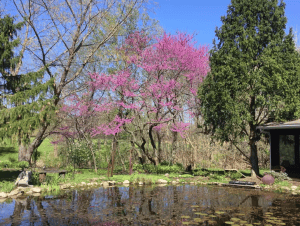 on of Redbud cultivars. Amelanchier arborea (Downy Serviceberry) and Amelanchier canadensis (Canadian Serviceberry) are similarly early-blooming, offering delicate white flowers, edible berries for birds and people alike, and outstanding fall color. Cornus alternifolia (Pagoda Dogwood) brings elegant layered branching and rich wildlife value, while Halesia carolina (Carolina Silverbell) charms with its pendulous white bell-shaped flowers in spring.
For those interested in native edibles, Asimina triloba (Pawpaw) produces the largest edible fruit native to North America and has gained a well-deserved following in recent years. Diospyros virginiana (American Persimmon) and Carya illinoinensis (Pecan) round out the edible native category, both offering tremendous wildlife value alongside their culinary appeal. Corylus americana (American Hazelnut) is another excellent choice, a shrubby native that produces nutritious nuts and provides dense cover for wildlife.
If you’re looking for shrubs to fill in a sunny border or naturalize a slope, Ceanothus americanus (New Jersey Tea) is a compact, drought-tolerant native shrub that produces showy clusters of white flowers loved by bumblebees and other native pollinators. Physocarpus opulifolius (Common Ninebark) is an adaptable, easy-to-grow shrub with exfoliating bark that adds winter interest, while Aronia melanocarpa var. elata (Black Chokeberry) delivers a knockout combination of white spring flowers, brilliant fall foliage, and dark berries that songbirds can’t resist. Hypericum kalmianum (Kalm’s St. John’s Wort) is a tidy, low-maintenance native shrub offering cheerful yellow blooms mid-summer and good pollinator support.
For larger landscape trees, Gymnocladus dioicus (Kentucky Coffee Tree) is a rugged, stately native with incredible adaptation to a wide range of soils and dramatic, bold texture through the winter months. Taxodium distichum (Bald Cypress) is a
surprising choice for many gardeners, a deciduous conifer that thrives in wet sites but also adapts well to average garden conditions, developing beautiful feathery foliage and warm cinnamon fall color. When you pull into our garden center, you are greeted with several bald cypress growing happily in our parking lot, handling the harsh environment of hard packed gravel with ease. Carpinus caroliniana (American Hornbeam) and Fagus grandiflora (American Beech) are two wonderful understory trees for shaded or woodland settings, bridging the gap nicely between our native shrubs and the woodland perennials like Wild Columbine and Virginia Bluebells described above.
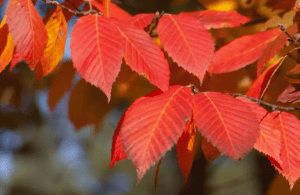
Rounding out the collection are a few additional standouts: Hamamelis virginiana (Common Witchhazel), one of the last plants to bloom in the season, producing fragrant yellow flowers in late fall after its leaves have dropped, and Sassafras albidum, a uniquely aromatic native tree with exceptional fall color and mitten-shaped leaves that are instantly recognizable. Aesculus pavia (Red Buckeye) adds brilliant red flower spikes in spring
that are a favorite of hummingbirds, and Pinus strobus (White Pine) provides year-round evergreen structure and vital winter shelter for birds.
Whether you’re planting a single specimen or designing a full native landscape, this 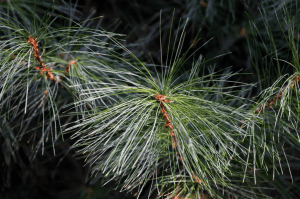 collection gives you everything you need to build something that is beautiful, ecologically meaningful, and deeply rooted in the Illinois landscape. Stop in to see what’s arrived, all trees and shrubs native to Illinois are marked in our Native to Illinois shop.hornbakergardens.com/collection/12/trees-&-shrubs-native-to-illinois.